
Generation 2 / Research
SithPhysics v2
Inside the research



The challenge
Can AoM-style multiplayer destructibles support credited hierarchical breakage, rideable buoyant wood and base-pivot poles as a reusable vanilla-JK system?
Can AoM-style multiplayer destructibles support credited hierarchical breakage, rideable buoyant wood and base-pivot poles as a reusable vanilla-JK system?
Research notes
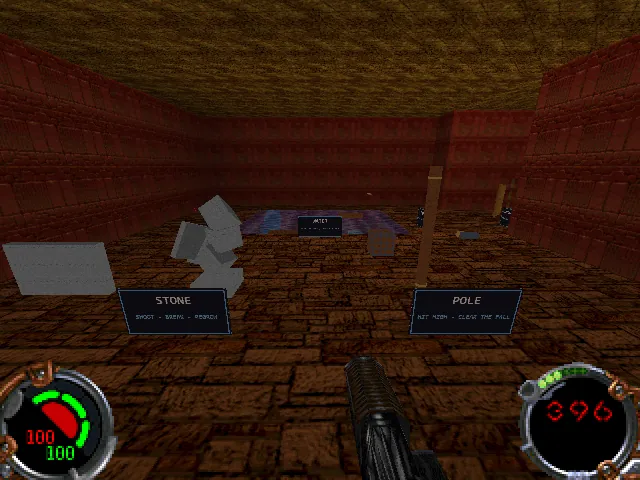
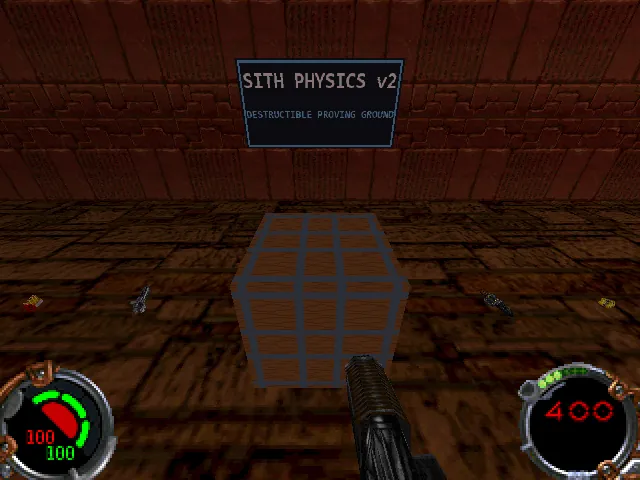
A playground for breakable objects
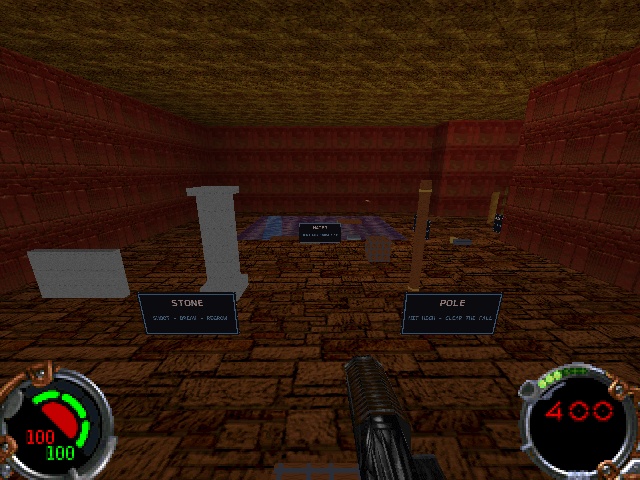
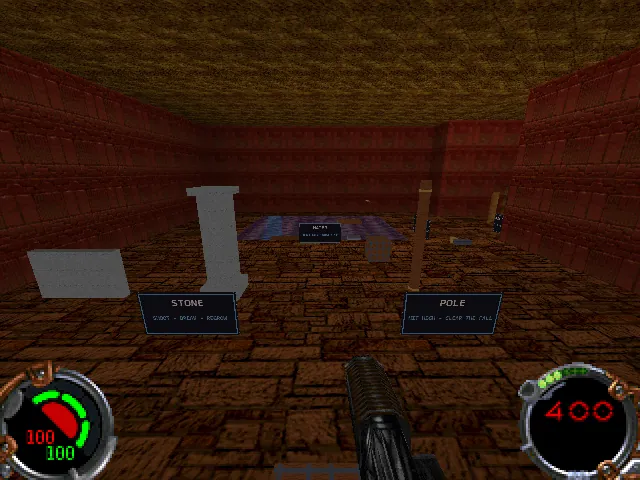
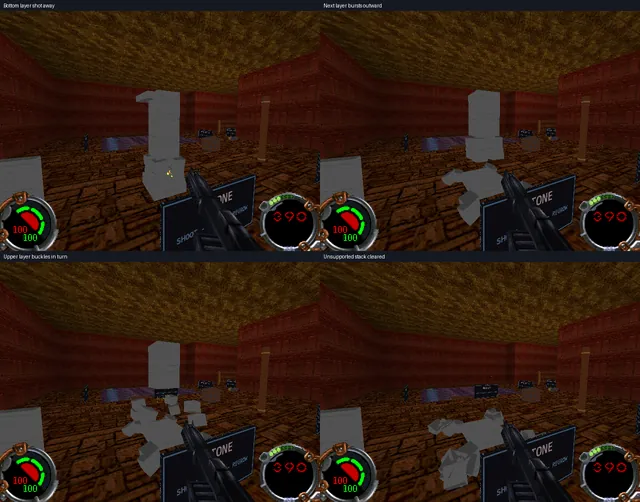
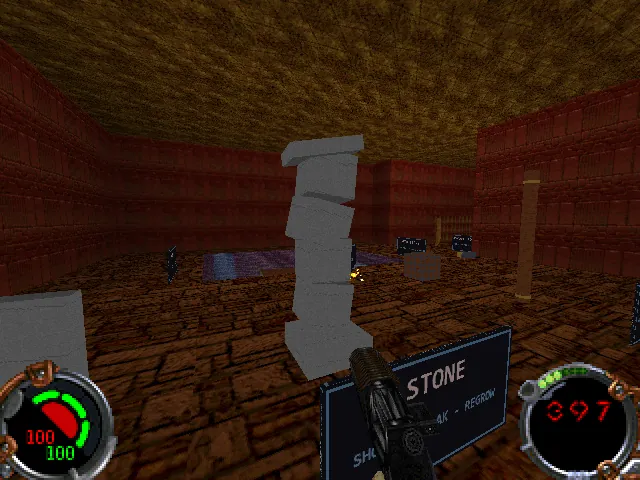
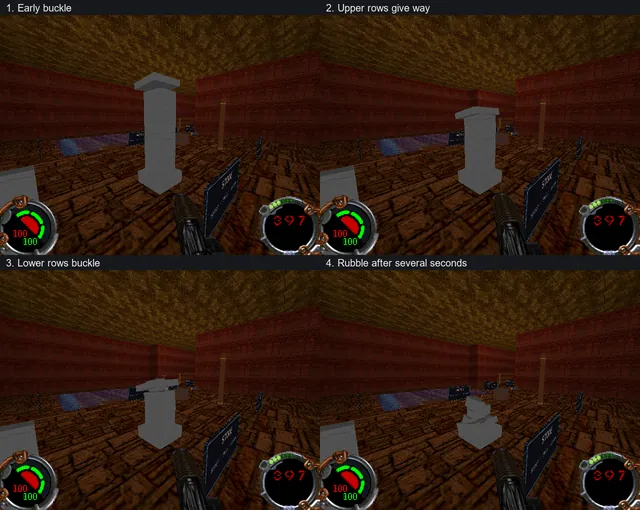
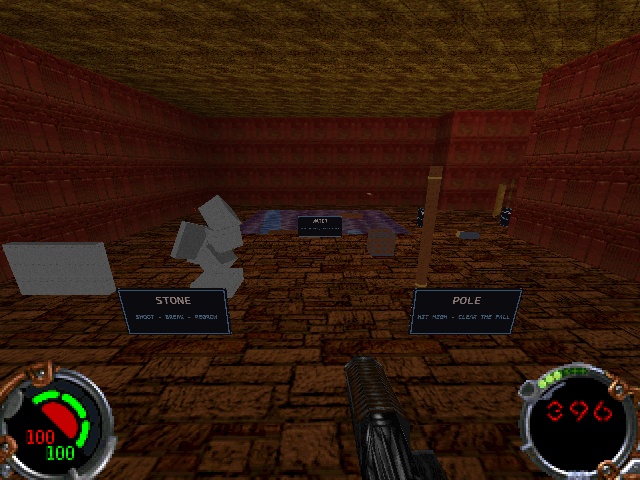
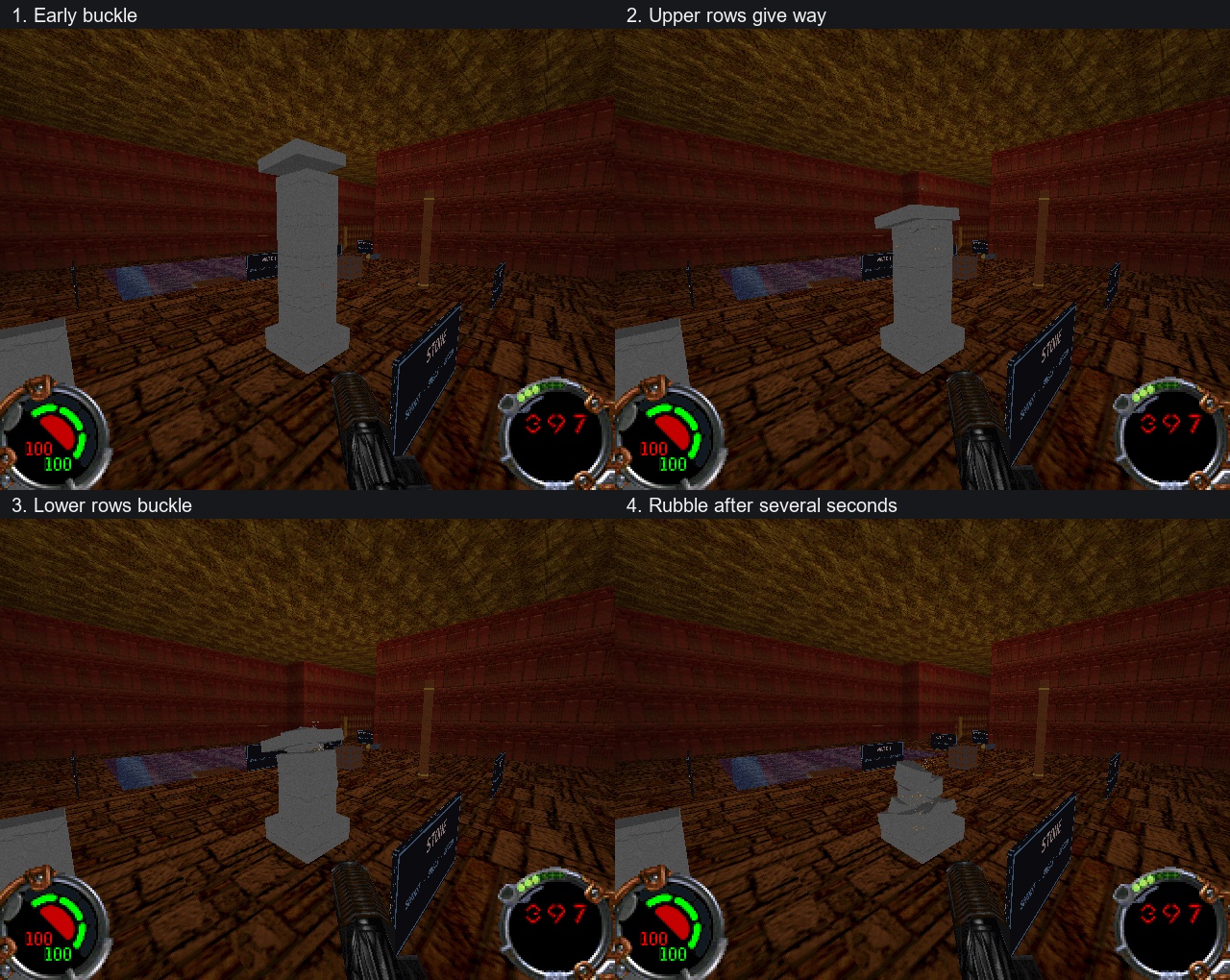
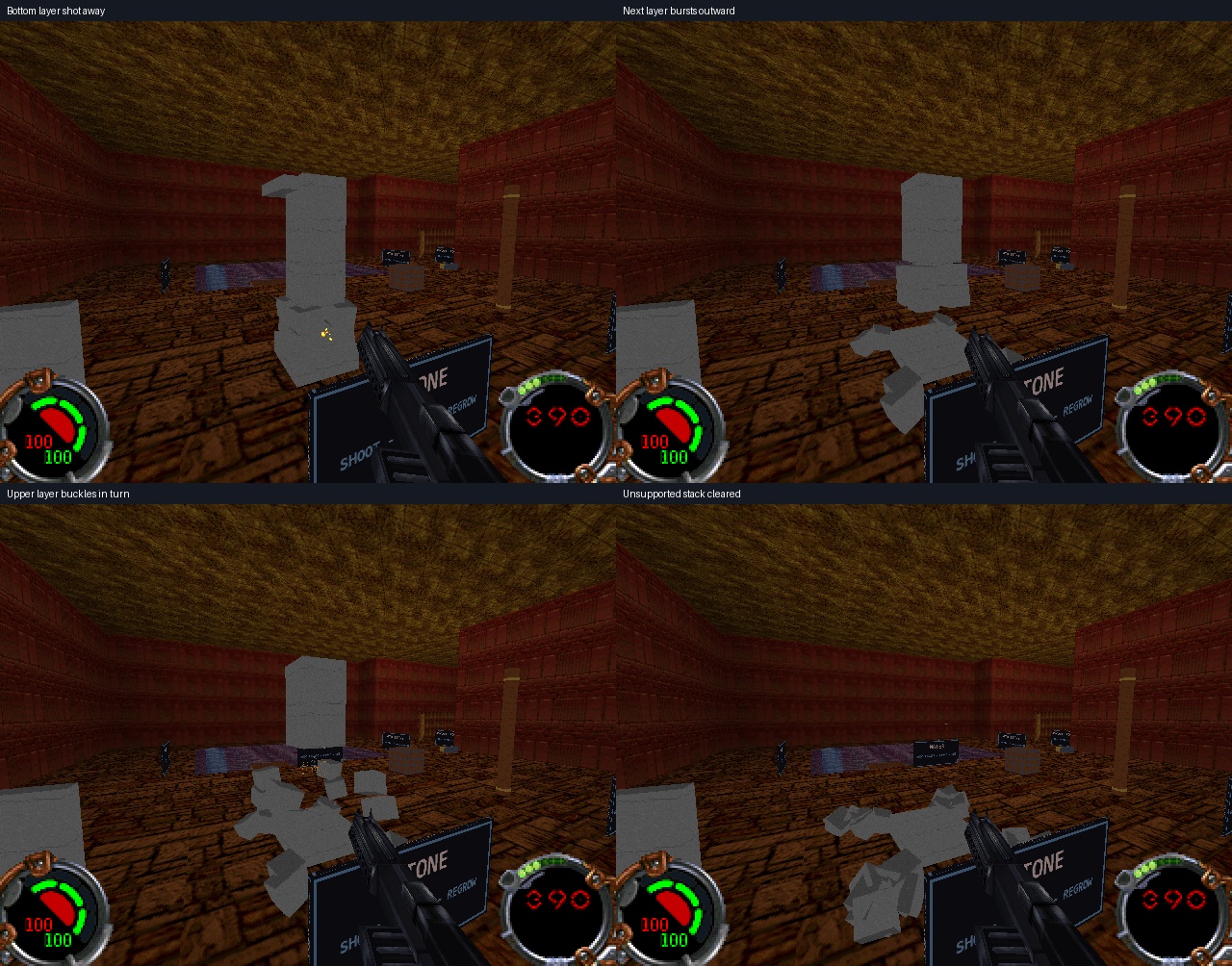
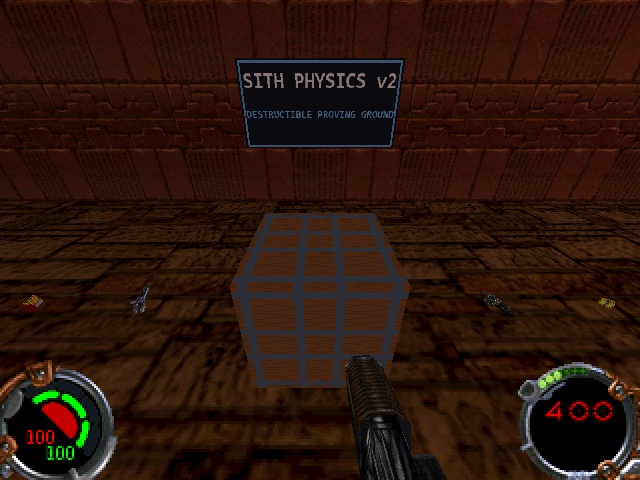
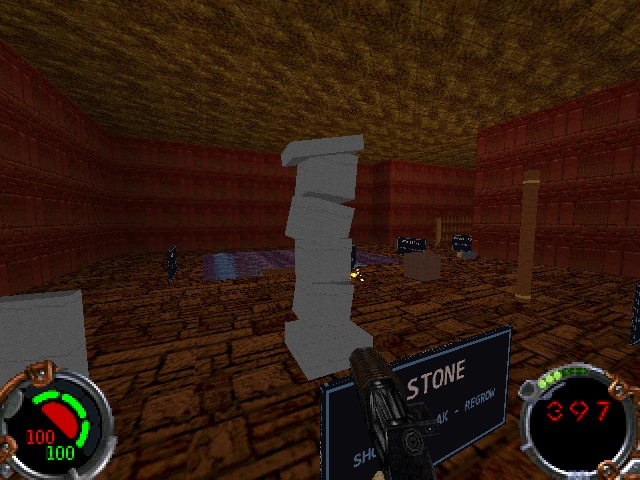
Six stations provide masonry columns, planks, crates, walls, Tetris blocks and a base-pivot pole. Matching pieces break into smaller tiers. The stone column buckles one row at a time over several seconds: each row leans and compresses briefly before it fractures. A preselected stopping point allows full collapses and partly standing outcomes. Breaking a lower row also schedules each unsupported upper row to buckle and break, while normal weapons can damage any row during its pause. Layer fragments burst outward independently of optional adrenaline effects. Roots regenerate for repeated trials; the fragment cap and inherited lifetimes bound the debris.
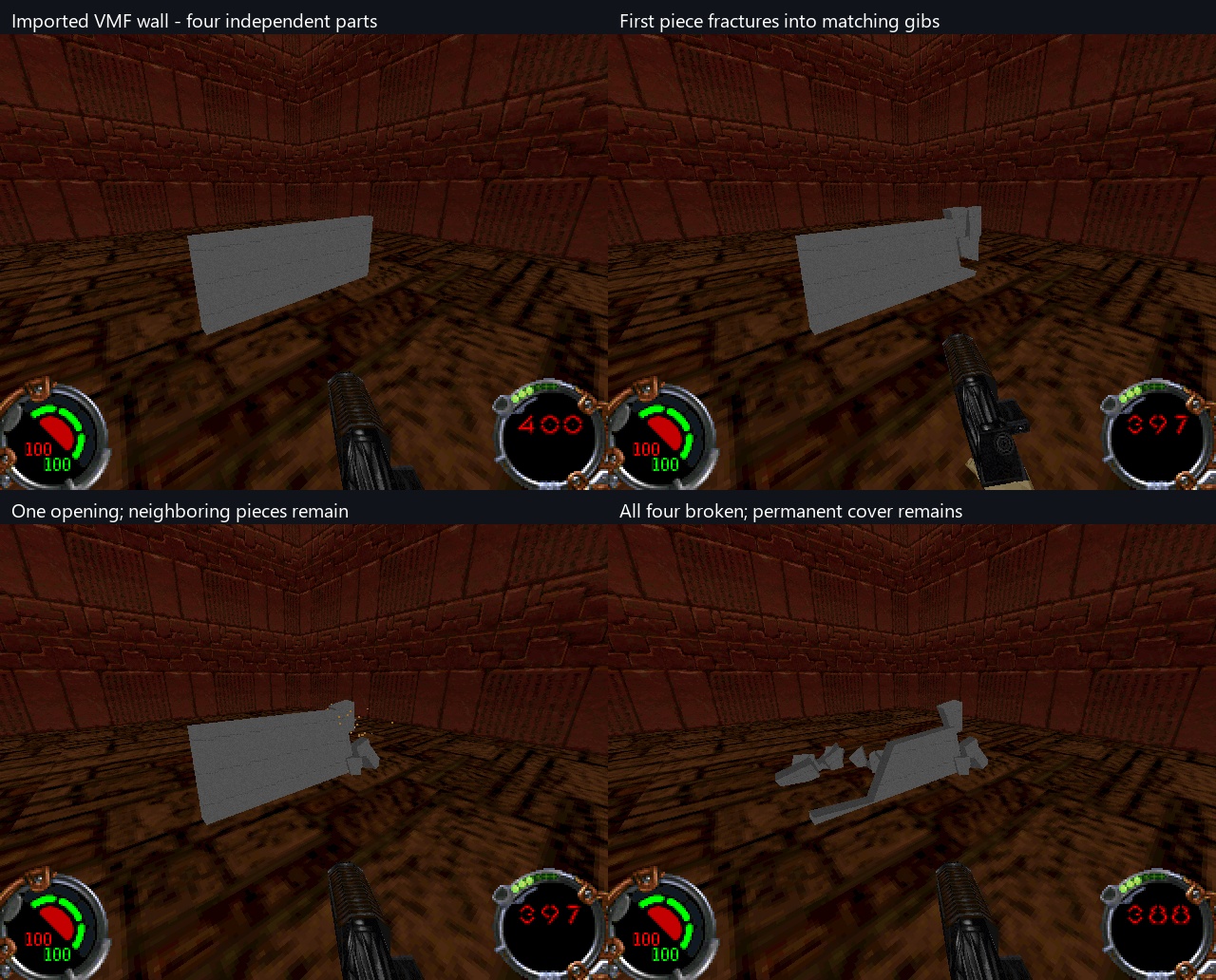
An authored VMF cover wall
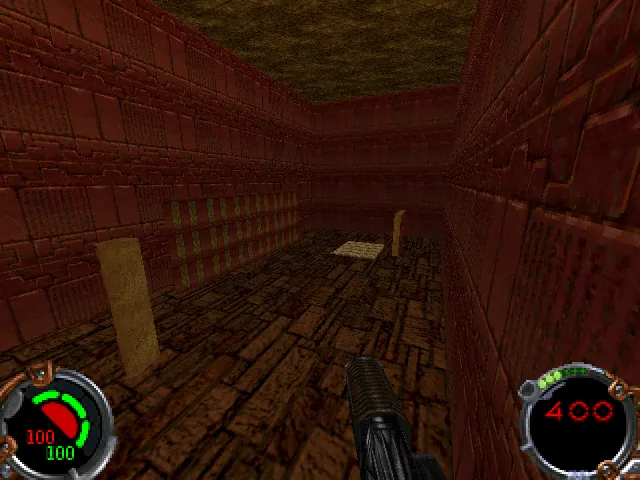
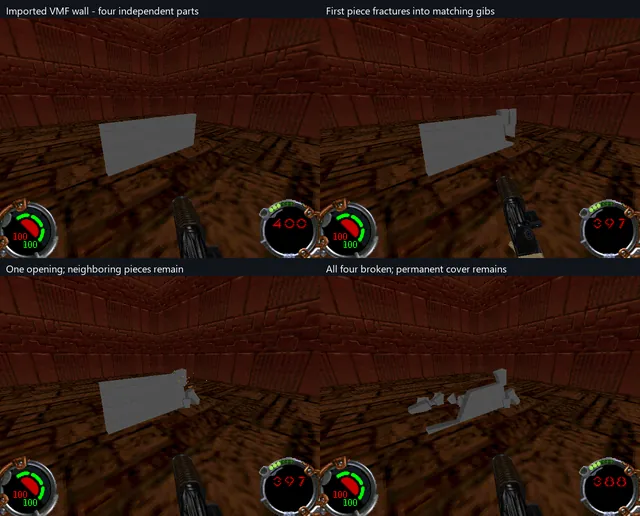
The owner-authored jk_breakables.vmf becomes a shared assembly with four independent 60-health parts and a permanent three-brush frame. Exact convex cuts create four primary gibs per part and two smaller matching pieces per primary. Original outer texture axes stay aligned across both tiers; newly exposed cut faces use the cut material.
The playground places two copies near its south corners, one rotated 90 degrees. Both reuse the same models, templates and SPV2 runtime, while health, regeneration, credited debris and openings remain per instance. The input VMF is kept unchanged; a byte-identical checked-in snapshot and explicit configuration make later builds repeatable. The same import path can accept future authored definitions with their own entity/material mappings and template prefix.
Original Asylum comparison gallery
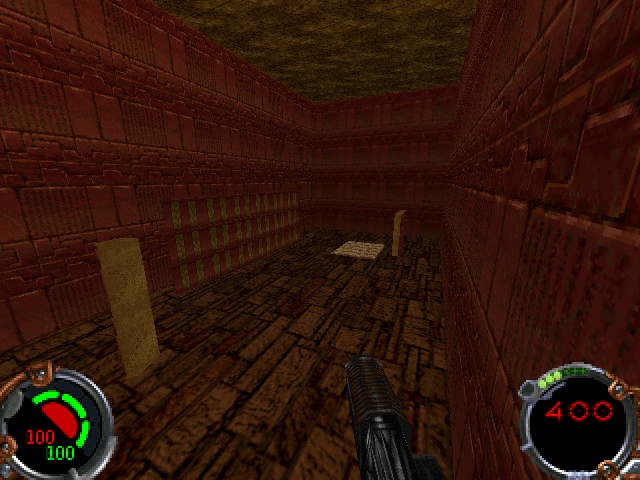
The gallery to the right of the pool contains an original pillar, an 18-tile wall, five original planks and the original Tetris assembly. Their source meshes, proportions, broken remnants and fracture offsets are preserved. Complete plank A/B subdivisions run through SPV2, including native water entry. The original 20val palette is used throughout; the archived RGB565 plank texture is converted to indexed colour for this playground.
Grounded debris
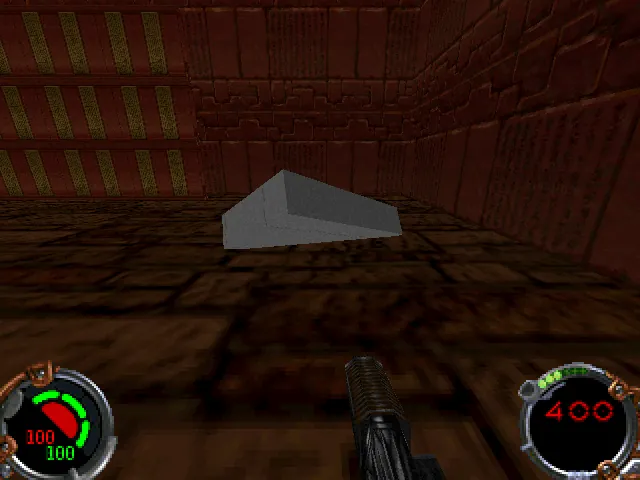
A fixed small sphere follows the shortest model dimension, so tilted stone can sink visually into the surface. Resting fragments use the complete mesh and an enclosing collision radius while retaining their small moveSize. Wood normal-aligns at floor contact. New pieces get a quarter second to spread without object collisions while level collision remains active. Real player-owned mesh-edge shots hit both procedural and original wood; deliberate off-mesh shots miss without losing native HP, ownership or lifetime behavior.
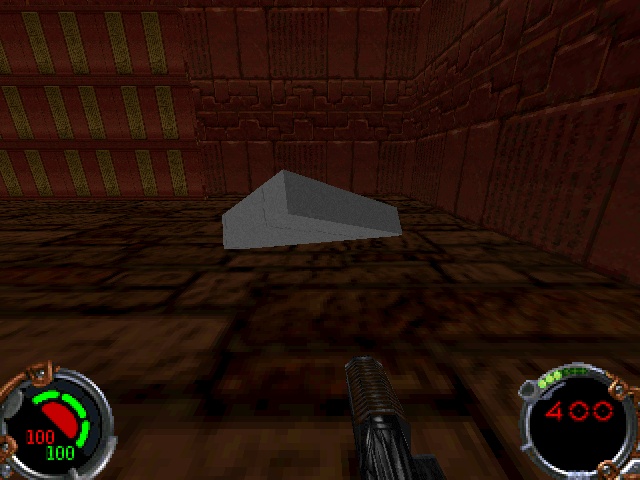
Action-driven debris
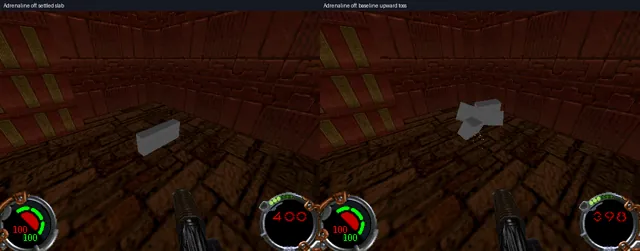
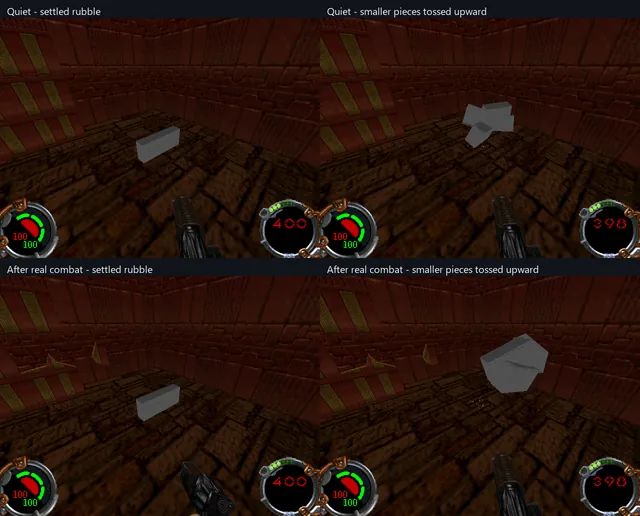
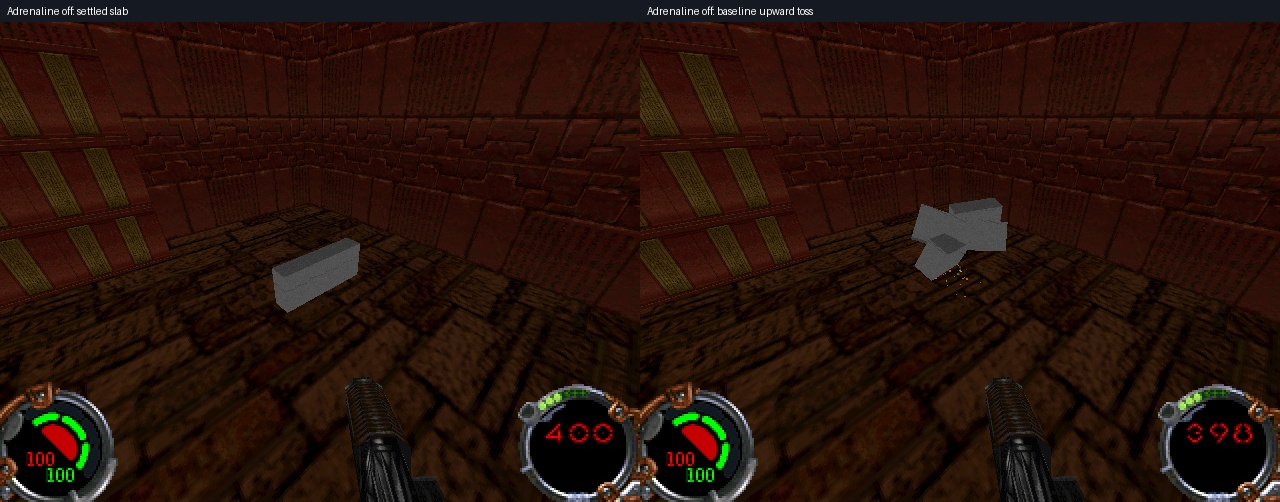
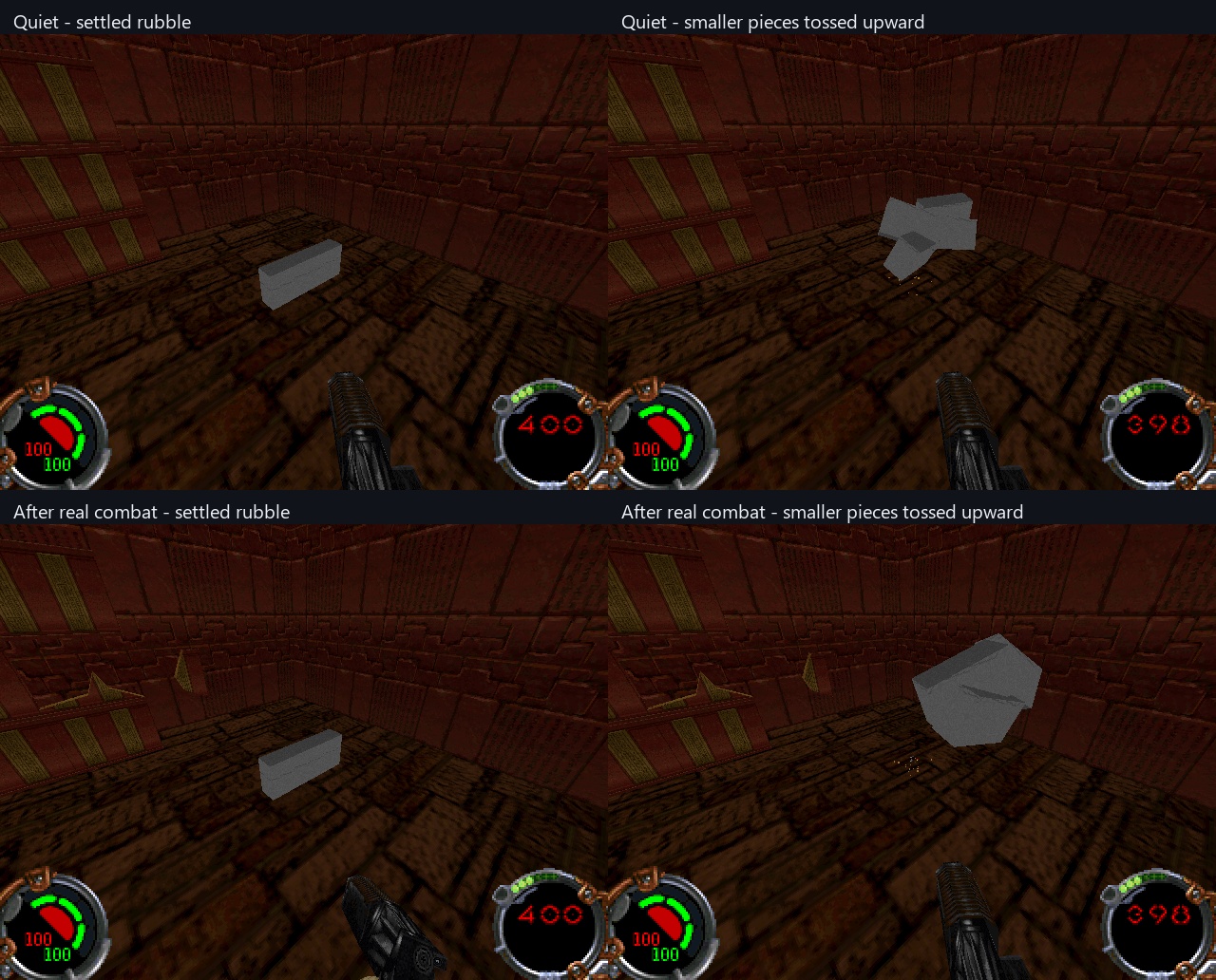
Grounded rubble always gives its smaller fracture pieces a fixed upward toss. Adrenaline defaults off for both the playground and reusable service; authors can opt in per level for the additional action-heat bonus and one-time playerward impulse. Quiet periods cool the optional activity down. The host snapshots a target direction once; moving away does not steer debris afterward. Initial destruction ownership, inherited lifetime and the quarter-second spread grace remain intact.
AoM supplies the original upward trajectory fudge and randomized spread. The requested activity accumulator and playerward bias are new SPV2 behavior. Staged column rows retain their paced collapse. Loose debris detaches from other loose debris to avoid native moving-support cycles while actors can still stand on rubble.
Complete poles and bounded feedback
A fallen pole produces four matching sections in their actual containing sectors. The grounded model remains visible until the entire burst succeeds; capacity shortage waits for a retry, and partial creation is rolled back. Four-direction bursts, a full-pool retry and all four native replicas on three peers pass.
The shared sound scheduler reserves at most four fracture/impact/splash voices, with debris limited to two slots and even-signature eligibility. Tiny-impact stage 2 is silent, and water plops share the same budget. Stone smoke and fleck particles remain independent of audio admission.
Water and weight
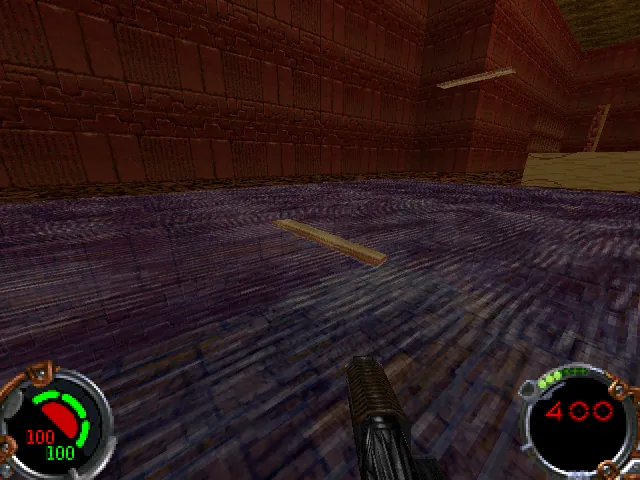
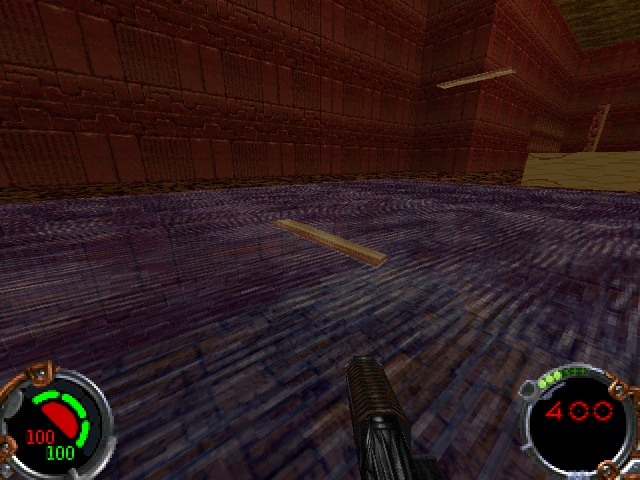
The pool is a native underwater sector. Stone descends slowly. Wood penetrates the surface, rises and levels; its floating height follows the model's actual top so offset original Asylum pieces remain visible. A rider pushes the wood underwater, then it resurfaces after the rider moves clear. Its final three seconds sink it before cleanup. The dispenser behind the start replaces expired water specimens.
Multiplayer and reuse
SPV2 replaces AoM's per-peer random gibs with shared host-spawned bodies and native GUID routing. Invisible per-player attribution anchors let stock shots hit the player's own fragments while GetThingParent still reaches the initial player. Fragment GUIDs, health, remaining lifetime and original kill credit are preserved; the restore guard rebuilds anchor records from native things. Native save/load, late joining and original-player kills pass. Native full descriptions omit parent links on saved/late copies; authoritative victim damage explicitly names the original player. No core changes are required. The next deathmatch arena and reusable prefab prototype maps will share this same P86 project and physics sources. The maintained versioned fork follows those prototypes; COG indices, capture slots, the pool mapping and pole floor plane are still explicit integration constraints.
What we learned
Build 17 passes 68/68 checks. Grounded rubble keeps its fixed upward re-fracture toss with adrenaline disabled; optional adrenaline adds only the action-heat bonus and playerward bias. The enabled combined upward result is unchanged. Real procedural and AoM fractures, a disabled-toss control, native trajectory/ancestry on three peers, original credit, lifetime and birth grace pass. Staged pillar rows retain their own outward burst and paced collapse without a duplicate generic kick. Existing lower-support/cap release, save/load, late-join crash, normal/reverse scoring, VMF wall, water and pole regressions remain green. The standalone package works with development hooks disabled, and all 14 runtime scripts fit original compiler budgets. Human updated-build acceptance remains open.
How to play
Move, jump, swim and fire using your normal controls. Bryar and stormtrooper rifles are supplied. Rail detonator (7), concussion rifle (9) and ammunition are behind the starting position.
Shoot the labeled props to break them into matching pieces. Stone columns buckle one row at a time over several seconds, throwing their layer fragments outward. Some stop partly standing. Destroying a lower layer makes the unsupported rows above buckle and break in sequence; any row can still be shot during its pause.
Shoot settled rubble again to toss its smaller pieces upward. The extra action-heat and playerward adrenaline effects are off in this playground. New gibs spread briefly, wood aligns on landing, and settled rubble uses its visible shape for weapon hits.
The two small cover walls near the south corners come from the authored VMF. Each has four separate breakable parts; the permanent frame remains. Break the rubble again for matching smaller pieces. Parts regrow after 30 seconds.
The comparison gallery opens to the right of the pool: original Asylum pillar, tiled block wall, planks and Tetris assembly. Another original plank sits over the pool.
Shoot the pole until it falls. Its base stays fixed; ground contact breaks it into four fallen cylindrical sections. A full debris pool delays the complete burst until space returns.
Walk forward onto the near-left floating board. It supports you briefly, sinks under your weight, then rises when you move clear into open water.
Use the crate dispenser behind the starting position (normally Space at close range) to replace wood and stone specimens. Three-second cooldown.
Procedural roots regrow after 18 to 30 seconds. Original planks take 15 seconds, wall tiles 60 and the pillar 120. Water specimens last 32 seconds and sink before removal; the north pool ramp leads out.
Release notes
Put P86.GOB in Jedi Knight's episode/ folder. Select SithPhysics v2 for a single-player game or host it as a multiplayer level; every peer needs this GOB.
Requires the Thing and Adjoin limit patches. The level reserves 2048 thing slots and caps SPV2 fragments at 192.
This is an experiment for a later reusable SPV2 package. Human play and patched retail Jedi Knight are pending; automated native-engine tests are described in the project record.
Credits
Original Asylum of Mortality meshes, fracture layouts, COGs and stone-particle parameters: SM Sith Lord, from Hub Level Pack 2005. Custom plank texture and four concrete crash samples are bundled with that archive; their individual creators are not identified. Source bytes and provenance are checked in; the plank texture is converted to indexed colour.
Jedi Knight: Dark Forces II weapons, base resources and remaining named sounds: LucasArts, loaded from the installed game.
SPV2 scripts, matching procedural models/materials and SED-authored playground: SM Sith Lord / JK workbench, developed with AI assistance.