
Generation 2 / Research
Chicken Walker
Inside the research
The challenge
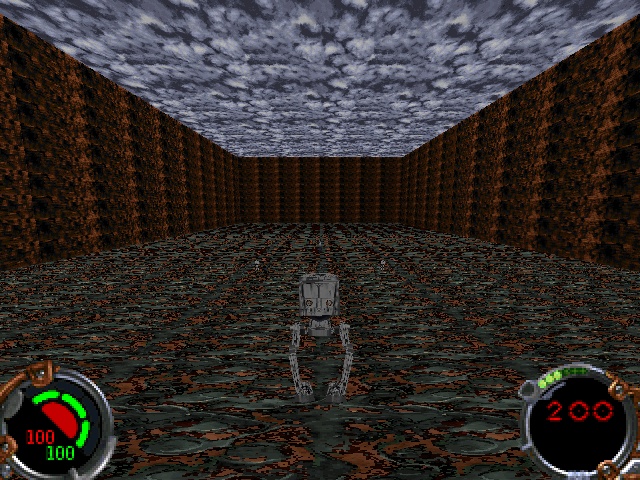
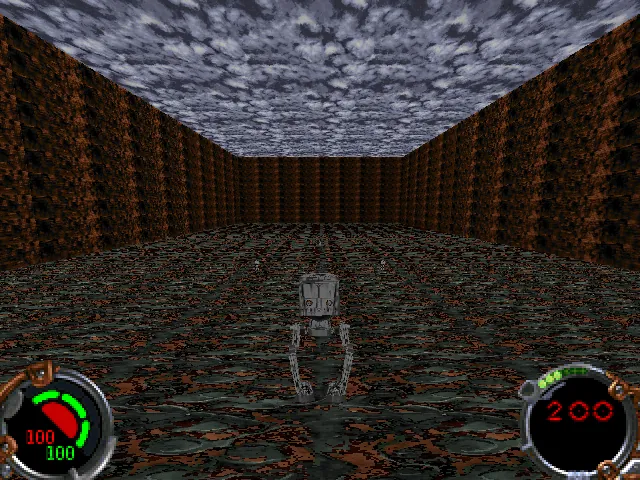
A pilotable chicken walker in a single-player test range: stock AT-ST walking animations, a third-person chase camera, twin concussion cannons and an actual player who jumps out when the hull fails.
Can single-player level COGs provide a convincing third-person AT-ST with twin concussion fire, real incoming damage and a surviving ejected pilot?
Research notes
A vehicle made from level scripts
The walker keeps the stock model, puppet, walking sounds and collision. The player supplies ordinary steering and weapon input, while a physical chase camera follows behind. Twin concussion rounds converge five units ahead and retain real explosions and damage. The shield dial displays hull percentage while piloting; infantry shields return on exit.
Combat and escape
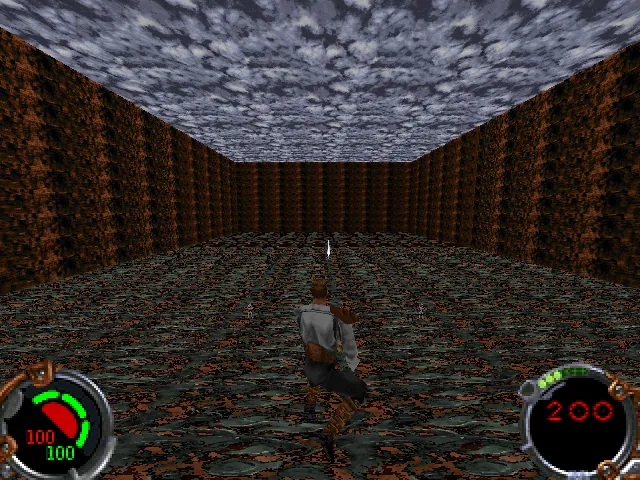
Native stormtroopers and a repeater commando supply incoming fire. One measured destruction run registered 228 hits before the 400-point hull failed; the actual player ejected alive and walked afterward. Manual jumping and close-range Use reboarding are also exercised through real keys. Saving under fire restores both hull and hit counts, after which attacks resume.
What remains to judge
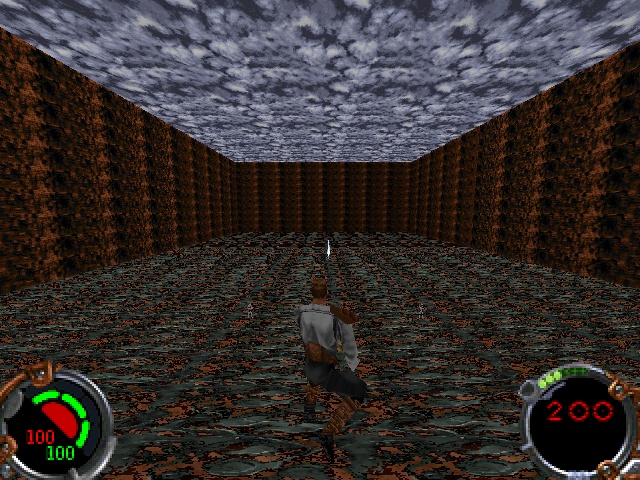
The proving ground has broad adjoins and a flat floor. Camera behavior in tight mission geometry, slopes and steps, mouse feel, combat balance and retail compatibility need human checks. It contains one walker, unlimited prototype cannon ammunition and four enemies. Hull and destruction are exposed through the controller's message bridge for later mission work.
What we learned
The mechanics work in OpenJKDF2 using level COGs and base-JK verbs, with no engine changes. Eleven gate rows cover real movement, mouse steering, twin projectile kills, native enemy damage, destruction, manual exit, Use reboarding and native save/load, with three deliberate failure controls. The standalone GOB also runs with development hooks disabled. Human driving feel and retail Jedi Knight remain unverified.
The real player stays hidden at the moving walker rather than in a distant control room. Native infantry can target that position and hit the hull. At zero hull, the controller restores the player, launches him upward and sideways, and selects the ordinary third-person player camera. The test range is a foundation for deciding whether to build vehicle missions.
How to play
W/S: walk forward/reverse. Mouse or arrows: steer. A/D: turn.
Mouse vertical: aim. Primary fire: paired concussion cannons.
Jump (normally X): bail out. Use (normally Space) close beside the cockpit: board again.
Shield dial while aboard: walker hull percent. Exit restores infantry shields and selects the rifle.
Reload the level after losing the walker. Cannons have unlimited ammunition in this prototype.
Release notes
Put P85.GOB in Jedi Knight's episode/ folder and select Chicken Walker.
This is a test range with one walker and four native enemies.
Eleven OpenJKDF2 gate rows pass, including a standalone packed run with development hooks disabled. Retail Jedi Knight and human driving feel are unverified.
Credits
Jedi Knight: Dark Forces II, AT-ST, infantry, projectiles, textures, sounds and animations: LucasArts stock assets, loaded from the installed game.
Level scripts and SED-authored proving ground: SM Sith Lord / COG Factory, developed with AI assistance. The input and chase approach builds on earlier generation-2 vehicle experiments.